Cart (0)
Your cart is empty.
July 22, 2026
By Brian G
"AI-first" is a phrase getting slapped on a lot of agency websites this year, often without much behind it. We use it too, so it's worth being specific about what it actually means here rather than letting it be a vibe.
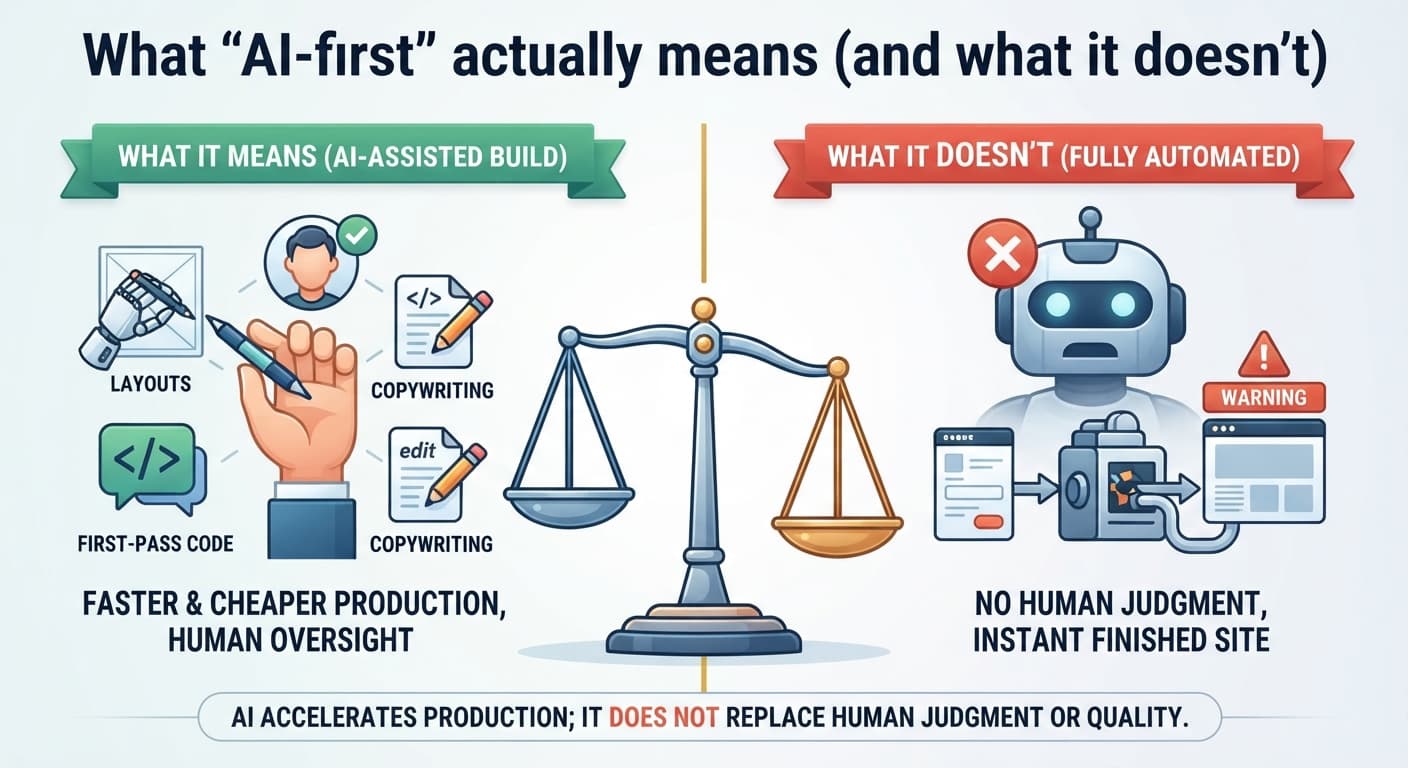
For us, it means: AI tools are used throughout the build process — drafting layouts, generating first-pass copy, writing and reviewing code — because they measurably make the work faster and cheaper to produce well. It does not mean a client fills out a form and an AI spits out a finished website with no human involved.
It also does not mean we skip judgment. Every page that ships has been read, edited, and approved by a person. Every chatbot we build is scoped and tested by a person before it goes live on a client's site. AI speeds up the first draft; it doesn't replace the decision about what's actually good.
A useful mental model: think of AI here the way you'd think of power tools for a contractor. A power drill doesn't make someone a good carpenter, and it doesn't replace the skill of knowing where to drill and why — it just makes the actual drilling faster. AI in web design plays the same role: it speeds up production, not judgment.
The reason this distinction matters: an agency that's honest about being AI-assisted should be able to charge less and move faster than one that isn't, without cutting corners on quality. If a business claims to be AI-first but charges traditional-agency rates and takes traditional-agency timelines, ask why.
If you want to test whether an 'AI-first' agency is being straight with you, ask what specifically changes if you decline AI-assisted work entirely — timeline, price, or nothing at all. Their answer tells you whether AI is actually load-bearing to their business model or just a marketing label.