Cart (0)
Your cart is empty.
July 22, 2026
By Brian G
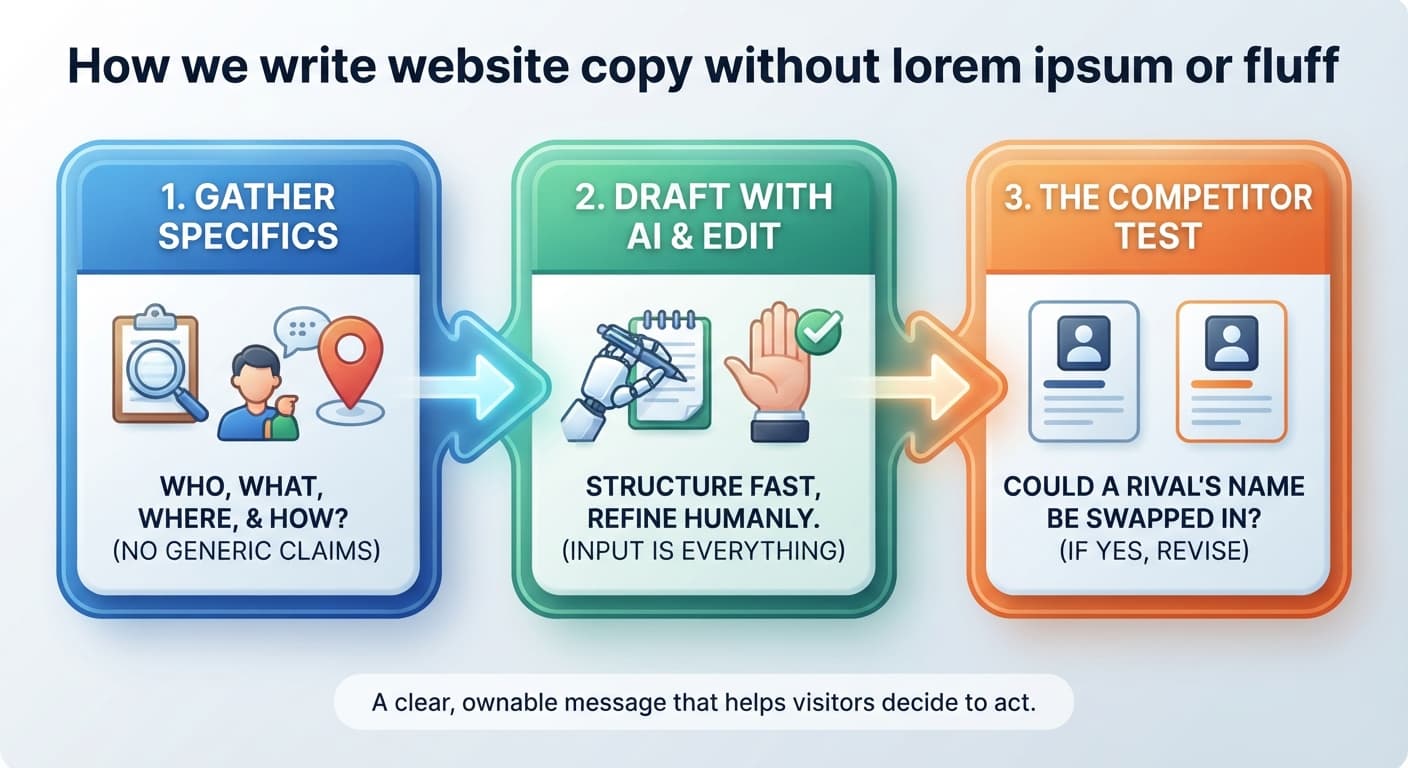
A huge amount of small business website copy reads identically from one business to the next — "we pride ourselves on quality and customer service," "your satisfaction is our priority." None of it is false, and none of it is memorable, and none of it helps a visitor decide anything.
Our approach starts with specifics: what exactly do you do, for whom, in what area, and what's actually true about how you work that a competitor couldn't copy-paste onto their own site? A landscape lighting company that walks every property after dark before designing a plan is a specific, ownable claim. "We provide quality lighting design" is not.
AI tools help us draft faster here — a first pass on page structure and rough copy takes minutes instead of hours — but the specifics have to come from the actual business, and a person edits every sentence before it ships. Generic AI output edited lightly still reads generic; the fix is input, not just editing.
If you're writing your own website copy rather than hiring it out, the fastest way to find your specifics is to answer this out loud, as if explaining to a neighbor: what do you actually do differently than the next business in your category? The answer to that question, almost word for word, is usually better homepage copy than anything generic a template suggests.
A second useful exercise: read your current homepage back and delete every sentence that could apply to any business in your industry. What's left is your actual differentiation — build the rest of the page back up from there instead of the other way around.
The test we use before publishing any page: could a competitor's name be swapped into this copy without anyone noticing? If yes, it's not finished yet.