Cart (0)
Your cart is empty.
July 22, 2026
By Brian G
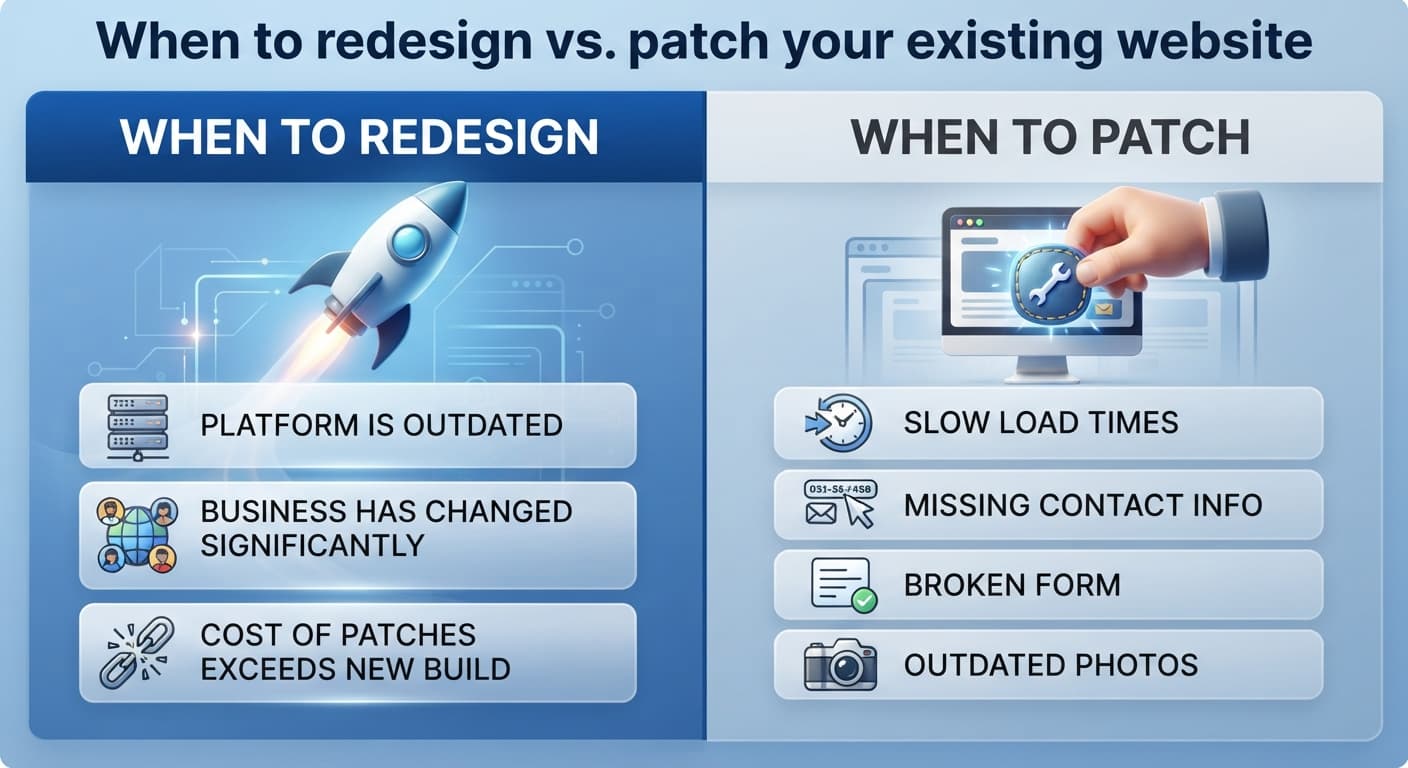
A common mistake we see: a business owner notices something's wrong with their website and jumps straight to "I need a whole new site," when the actual problem is one specific, fixable thing — slow load times, an unclear headline, an outdated photo, a missing phone number in the header.
A full redesign makes sense when: the underlying platform is genuinely outdated or hard to update, the business itself has changed significantly since the site was built (new services, new positioning, new audience), or the accumulated list of smaller problems is long enough that patching them individually would cost more than starting fresh.
A patch — not a redesign — makes sense when: the core structure and content are still basically sound, and the actual complaints are specific and few (slow, hard to find the phone number, out-of-date photos, a form that doesn't work). These are usually inexpensive, fast fixes compared to a full rebuild.
A useful way to decide: list every specific complaint about the current site, then estimate honestly whether fixing each one individually would cost less than a full rebuild. If the list is short, patch it. If the list is long and every item touches the same underlying structural problem, a rebuild is probably the better use of money.
Either way, this is worth a direct conversation before paying for anything — a good web partner should be willing to tell you honestly that you don't need a full rebuild, even though that's the larger invoice for them.