Cart (0)
Your cart is empty.
July 22, 2026
By Brian G
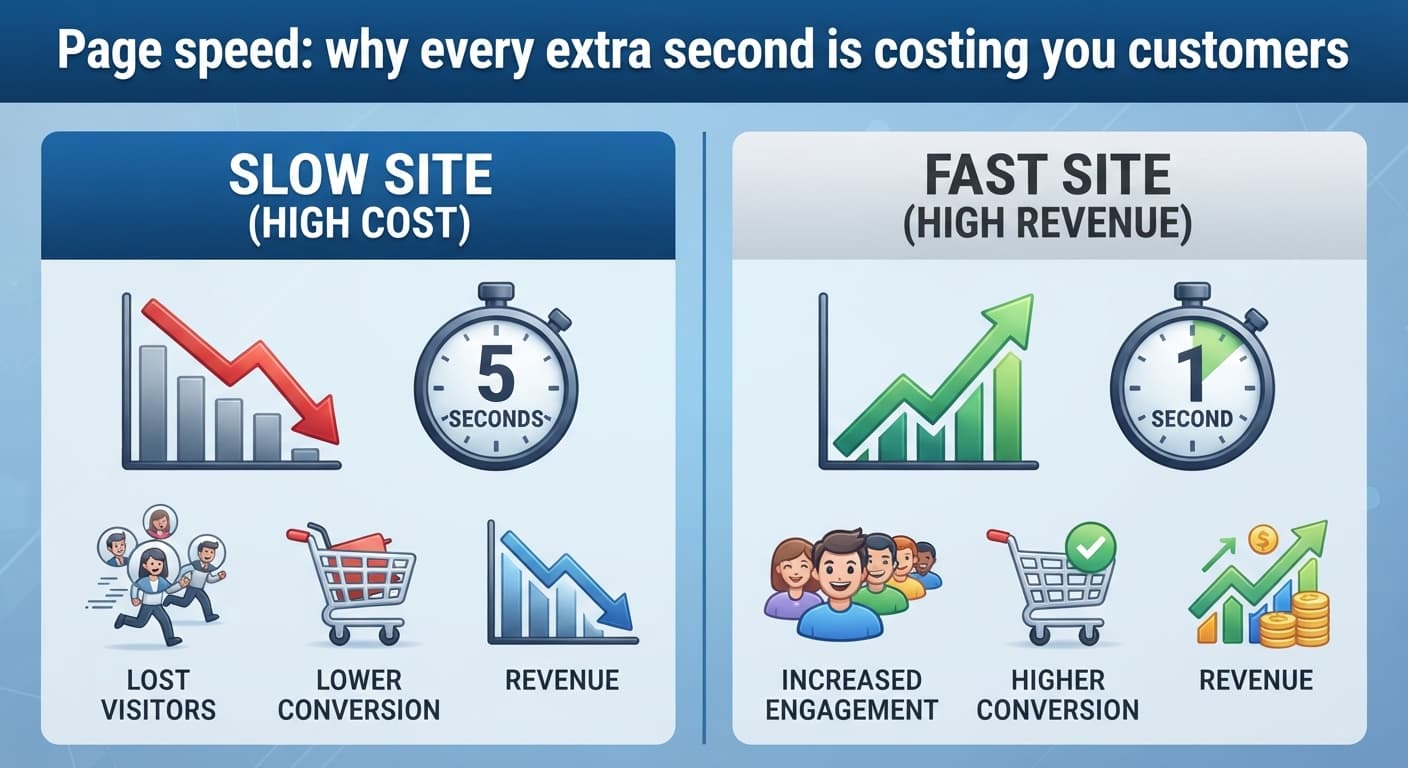
Page speed is one of the few website metrics with a genuinely well-documented, direct relationship to conversions: each additional second of load time measurably reduces the percentage of visitors who stick around and take action. On a slow connection or an older phone, that effect compounds fast.
The most common causes of a slow small business website: oversized, uncompressed images; too many third-party scripts (chat widgets, tracking pixels, embedded videos) all loading at once; and hosting that's cheap for a reason. Most of these are fixable without a full rebuild.
A free, quick way to check your own site: run it through Google's PageSpeed Insights and look at the mobile score specifically, since that's how most visitors will actually experience your site. Anything that consistently becomes usable within a couple of seconds is a reasonable target for a small business site.
If your site is slow, the highest-leverage fixes in order are usually: compress and resize images before uploading them (most website builders don't do this automatically), remove any embedded widgets or scripts you're not actively using, and confirm your hosting plan isn't oversold shared hosting struggling under load.
This is a case where the fix is genuinely more valuable than most marketing spend — a faster site converts more of the traffic you already have, before you spend anything trying to get more.