Cart (0)
Your cart is empty.
July 22, 2026
By Brian G
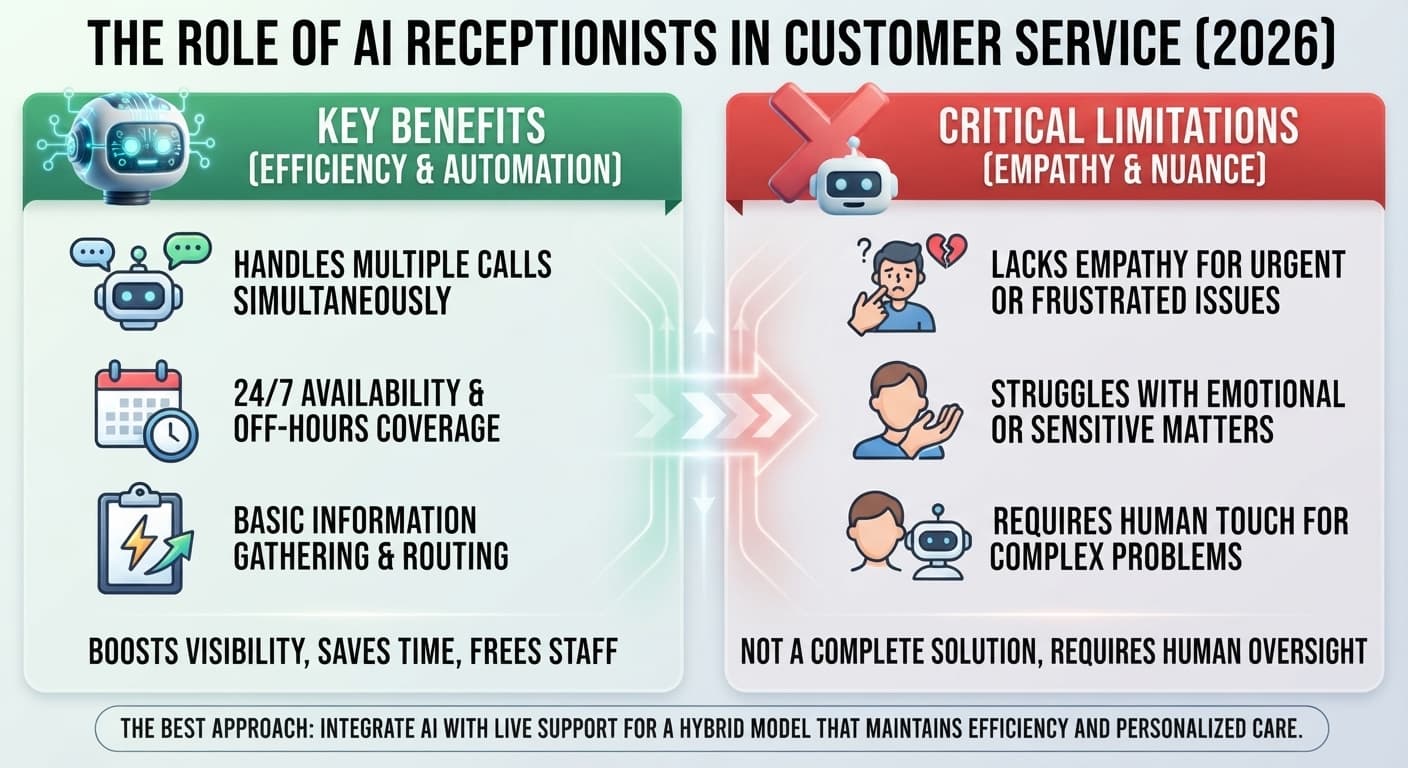
In 2026, artificial intelligence (AI) has become a cornerstone of many businesses' operations, and one area where it shines is customer service. AI receptionists are increasingly common in small businesses because they can handle routine inquiries efficiently and cost-effectively. However, despite their advancements, there are still key roles that an AI cannot fully replace.
One major benefit of AI receptionists is their ability to handle multiple calls simultaneously with minimal delays. They can route calls based on predefined rules, ensuring that customers get timely assistance. For instance, if a call comes in about a specific service or product line, the AI can direct it to the right department instantly. This capability not only improves customer satisfaction but also frees up human staff for more complex tasks.
Another advantage is the 24/7 availability of AI receptionists. They don’t need breaks or vacations and can work around the clock, making sure that no calls are missed during off-hours. This round-the-clock service can significantly enhance your business's reputation by showing customers that you're always ready to help.
Moreover, AI receptionists excel at basic information gathering. They can quickly gather details about a customer’s needs or concerns and escalate issues to the appropriate team member when necessary. This automation saves time for both the customer and the staff, as the human employees are left with more critical tasks.
However, while AI is incredibly useful, it still falls short in areas that require empathy and personal interaction. For instance, complex issues often need a human touch. A customer who calls about an urgent problem or expresses frustration might require a more nuanced response than an automated script can provide. In such cases, having a live receptionist available to connect with the customer directly is invaluable.
Additionally, AI receptionists may struggle with handling emotional or sensitive matters. For example, if a customer needs advice on navigating a product issue or dealing with a personal concern related to your services, a human voice can provide comfort and reassurance that an AI cannot.
In 2026, the role of AI in small businesses is likely to expand further, but it will do so by complementing rather than replacing humans. While you can automate routine tasks like handling basic inquiries or directing calls, certain aspects of customer service still demand human interaction and understanding. Balancing these two approaches can help your business provide a better overall experience for your customers.
To make the most of AI receptionists in 2026, consider integrating them with live support when necessary. This hybrid approach ensures that you maintain efficiency while also offering the personalized care that keeps your customers satisfied and loyal.