Cart (0)
Your cart is empty.
July 22, 2026
By Brian G
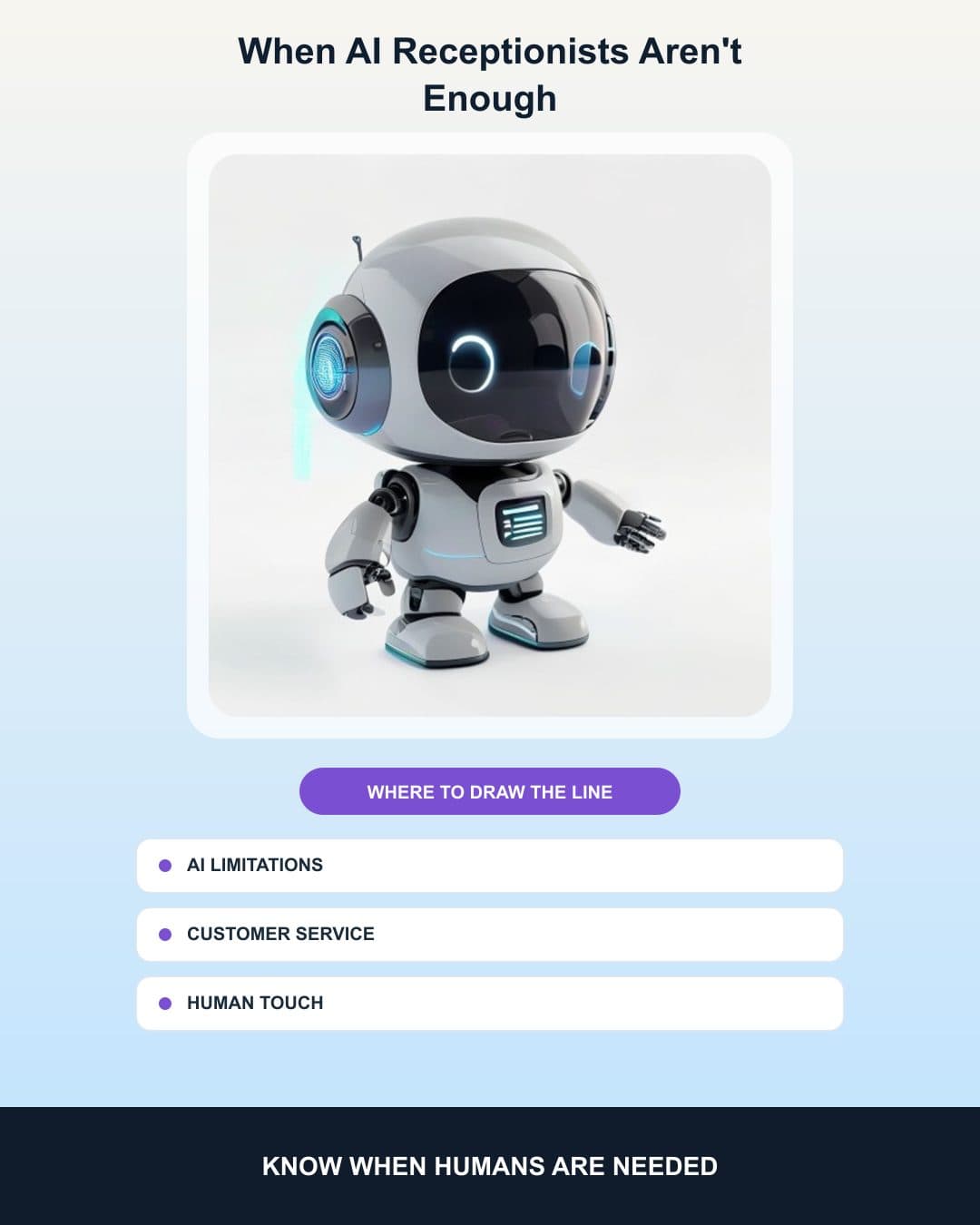
For many small businesses, deploying AI-powered receptionists has been a game-changer for customer service. These digital gatekeepers can filter out spam messages, respond to routine queries, and even book appointments. But as enticing as the promise of '24/7 coverage' may be, it's essential to recognize the limits of these automated systems.
One common misconception is that AI receptionists can replace human interaction entirely. However, they're not equipped to handle nuanced or emotionally charged conversations – nor should they try to. By relying too heavily on AI, you risk alienating customers who crave a more personal touch.
So when does human intervention become necessary? It usually happens in situations where the customer has a complex issue, needs reassurance, or simply wants someone to listen. This is particularly true for high-ticket services like home repairs or medical consultations, where empathy and expertise are paramount.
To make the most of your AI receptionist, consider implementing a hybrid model. Train the system to recognize when human assistance is needed and automatically escalate those cases to a designated customer support team. This way, you can leverage the strengths of both AI and human interaction – and avoid overreliance on automated systems that inevitably have their limits.
Don't get me wrong: AI receptionists are an excellent tool for small businesses with limited resources. But by acknowledging their limitations and combining them with human expertise, you can create a customer service experience that's truly exceptional.